.jpg) |
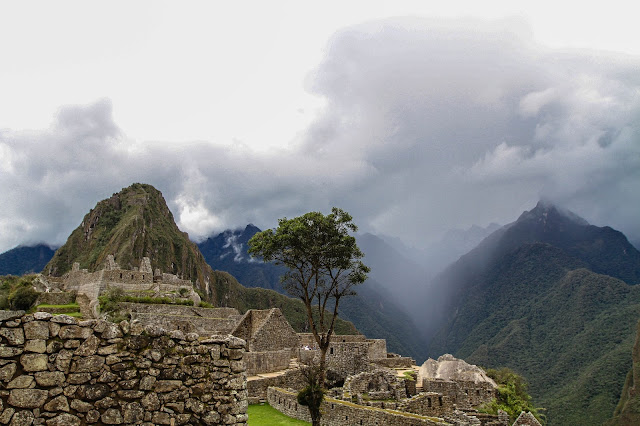
| View of an incoming storm from the ruins at Machu Picchu |
Last spring my girlfriend, myself and a couple friends decided to explore Peru for a week and half. It was a country I knew little about beyond containing both Machu Picchu and the Nazca Lines. I left with a deeper understanding of a vibrant nation full of varying cultural identities, fauna, flora, and countryside.
.jpg) |
| You'd almost think this was in the Sahara |
.jpg) |
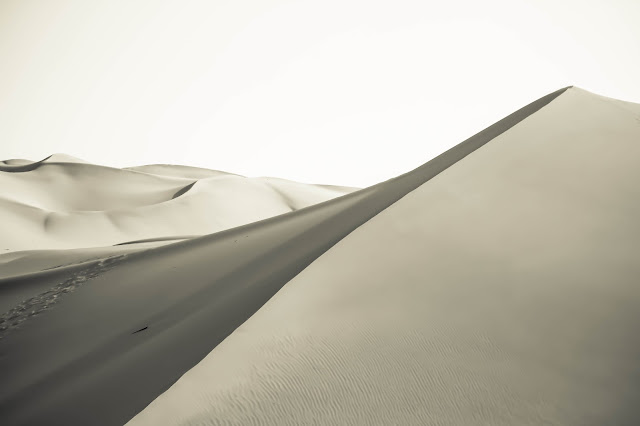
| Perfect for sand boarding |
Prior to our arrival we had hired a driver to take us south to the towns of Pisco, Ica and eventually on to the oasis at Haucachina where we would stay for a couple days. We were picked up promptly from the airport and whisked away through the streets of Lima at the break of dawn, thankfully before rush hour bogged us down in a sea of three wheeled taxis called tut tuts, motorcycles, and delivery trucks. The drive took us along the coast before the scenery shifted to an arid, desert landscape, unlike anything I would have expected; we were venturing into the extreme northern reaches of the Aticama desert, one of the driest in the world. Some parts of the Aticama have never seen rainfall and it has been labeled as having some of the most Martian like terrain on Earth. Because of this the area has served as both a test bed for NASA as well as a great film site for Hollywood.
.jpg) |
| Wide array of Pisco options |
.jpg) |
| Old school method of fermentation |
On our drive down we stopped in small villages along the way that specialized in the production of a grape based liquor called Pisco. The liquor has a long history in the region since the time of the conquistadors originally carrying over grapes from Europe with them. To this date there is still a long running feud between Peru and Chile on which nation actually originally distilled the liquor. At the various stops we learned about the process of hand picking the grapes and the ceremonial foot stomping that occurs every year accompanied by music, food, and drink. Much of the actual modern day product takes a much more mechanical approach, for better or worse I suppose. Of course, at the end of all these historical tid bits and touring the vineyard we were taken to the gift shop and provided with some samples, including a complimentary Pisco Sour (the national drink of choice consisting of Pisco, simple syrup, lime juice and an egg white fluff on top). Being the sucker I am for international booze I purchased a couple bottles of the stuff even though frankly its not very good straight. From there we continued south to Haucachina.
.jpg) |
| Haucachina Oasis |
The road into Haucachina drops you into a patch of greenery nestled between two massive dunes which seems quite surreal. The town itself was really nothing to speak of, it is almost entirely a tourist based economy which tends to take away from the uniqueness of it. Additionally, a few decades ago water levels in the oasis began to drop substantially due to the towns usage so now water is actively pumped into it, which was a bit of a downer to learn. What the town lacked the surrounding desert surely made up for, and thankfully one of the main tourist attractions was the buggy tours conducted by what seemed to be every Peruvian in the town.
 |
| You would think sand would be an issue here... |
.jpg) |
| Backseat was the most exhilarating |
The buggies were basically supped up versions of the dune buggies sometimes found at Costco except with a V8 engine and room for 10. Our driver was not afraid to floor it going up and down the dunes. Along the way the driver stopped on top of a massive dune and gave us the opportunity to sand board down. Its much like snow boarding and the sand even sounds very similar to snow passing underneath you. I'd strongly recommend partaking!
.jpg) |
| The Pan American Highway |
.jpg) |
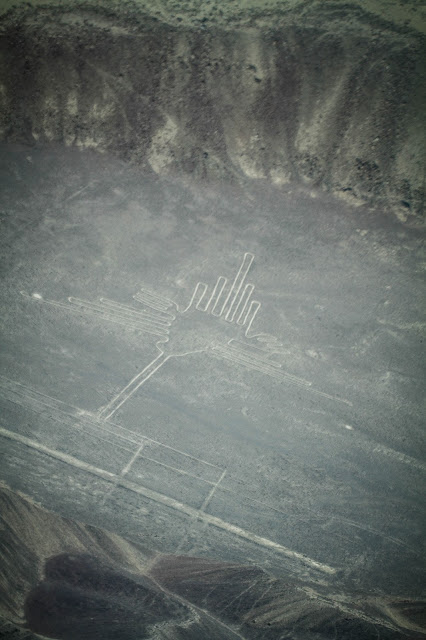
| Nazca Hummingbird |
.jpg) |
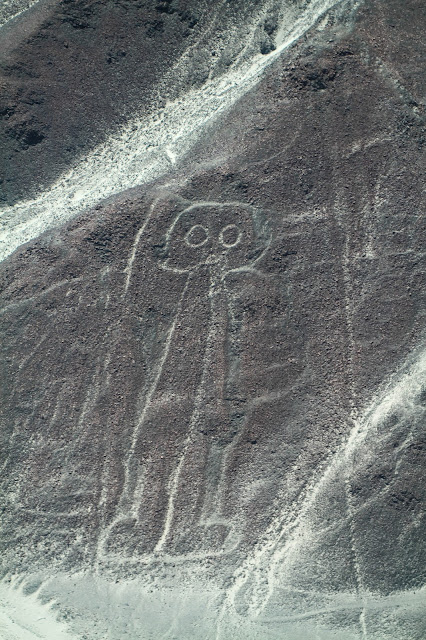
| The Astronaut |
.jpg) |
| Nazca Lines from the air |
A lot of mystery still surrounds the creation of the lines, shapes, and creatures dug into the desert. What can be said for them is that they are an impressive sight. We were able to hire a pilot and a 6 seater Cessna to fly us over the Nazca Lines for roughly 45 minutes. The ride isnt for the weak stomached as my girlfriend found out after throwing up for much of the flight but if you can stomach it the experience is once in a lifetime. Some of the lines, like in the ones pictured above, extended to the horizon. Other shapes were perfect rectangles and triangles. The animal shapes, along with the astronaut, were breathtaking. The craftsmanship and skill that went into these figures was simply outstanding and left me in deep thought for much of the rest of the afternoon about how these could have been constructed and what purpose they would have served to the civilizations that built them.
.jpg) |
| Maria Reiche's VW |
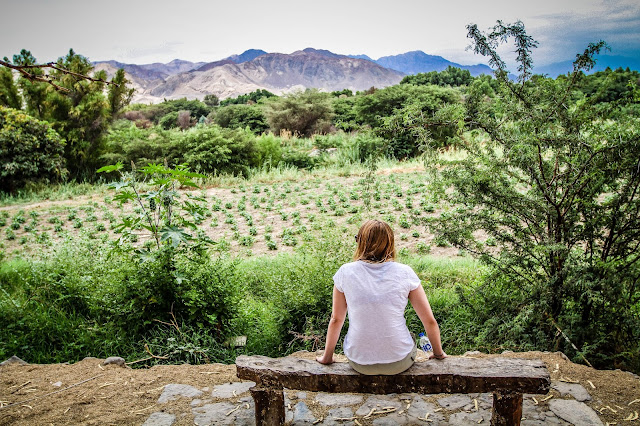.jpg) |
| Jess pondering cute animals or something I'm sure |
Before leaving Nazca we stopped at a local museum housed in the former residence of Maria Reiche, the German woman who came to Peru and began studying the Nazca lines in the 1940's. She was an advocate for the protection of the region from further development to the day of her death and was even buried in the area. The museum was filled with artifacts from the region including a mummy of a girl found buried beneath the desert.
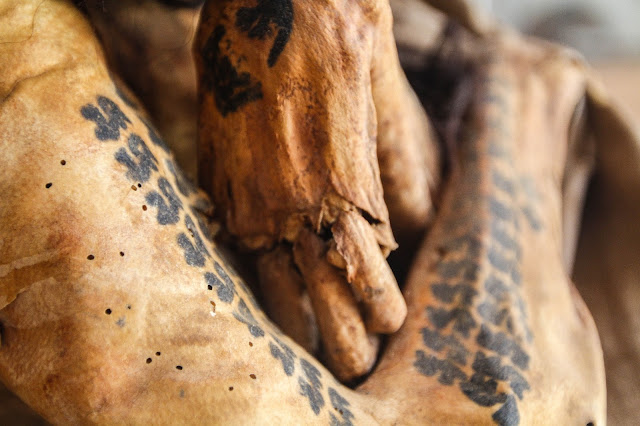.jpg) |
|
Our final stop before heading back north was at a small workshop specializing in traditional Nazca pottery crafted utilizing the same tools, techniques and materials used by the Nazca culture centuries ago. The shop was owned and operated by an extremely friendly gentleman named Toby who was eager to show us around his workshop, detail the techniques he utilized, and of course show us some of his final products readily available for sale. The care and precision he put into the pot we saw him make (a traditional Nazca water pot) was outstanding; he explained what rocks and soil was gathered for the various dyes and pigments used to paint colorful figures and stories on the exterior of each pot. Toby was indicative of many of the people we would meet across the country, extremely friendly, industrious and proud of their culture and heritage.
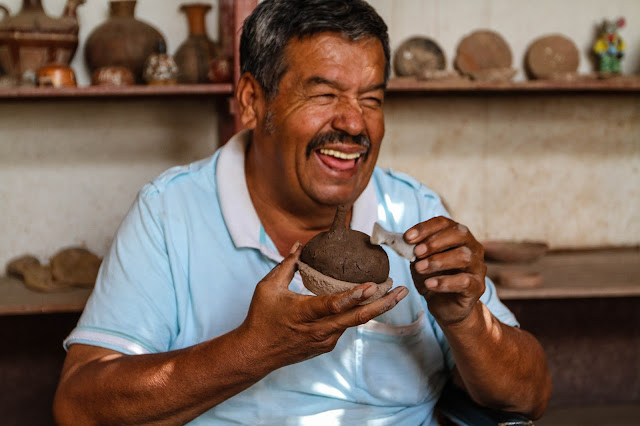.jpg) |
| Toby illustrating traditional pot making techniques |
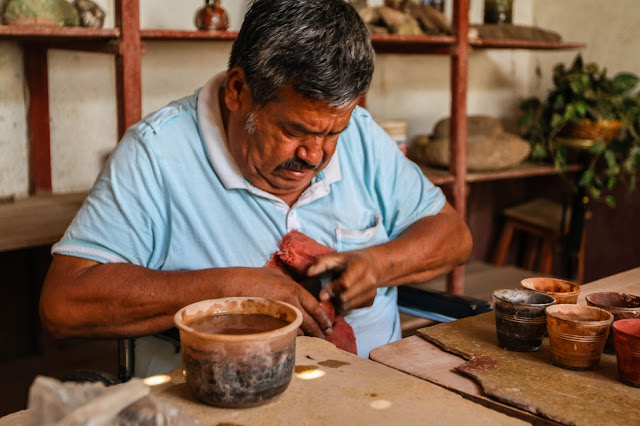.jpg) |
| Toby polishing and painting |
In part 2 we travel north to the Paracas Nature Reserve and then on to Puerto Maldonado, the gateway to the Peruvian Rainforest...
.jpg)


.jpg)
.jpg)
.jpg)
.jpg)
.jpg)
.jpg)
.jpg)

.jpg)
.jpg)
.jpg)
.jpg)
.jpg)
.jpg)

.jpg)
.jpg)
.jpg)
.jpg)
.jpg)
.jpg)
.jpg)
.jpg)
.jpg)
.jpg)